

Guides
How to review a cigar: a beginner's guide
You do not need to be an expert to review a cigar. What to look at before lighting it, what draw, burn and thirds mean, and how your score is calculated, step by step.

Logos belong to their brands and appear here only to identify them.
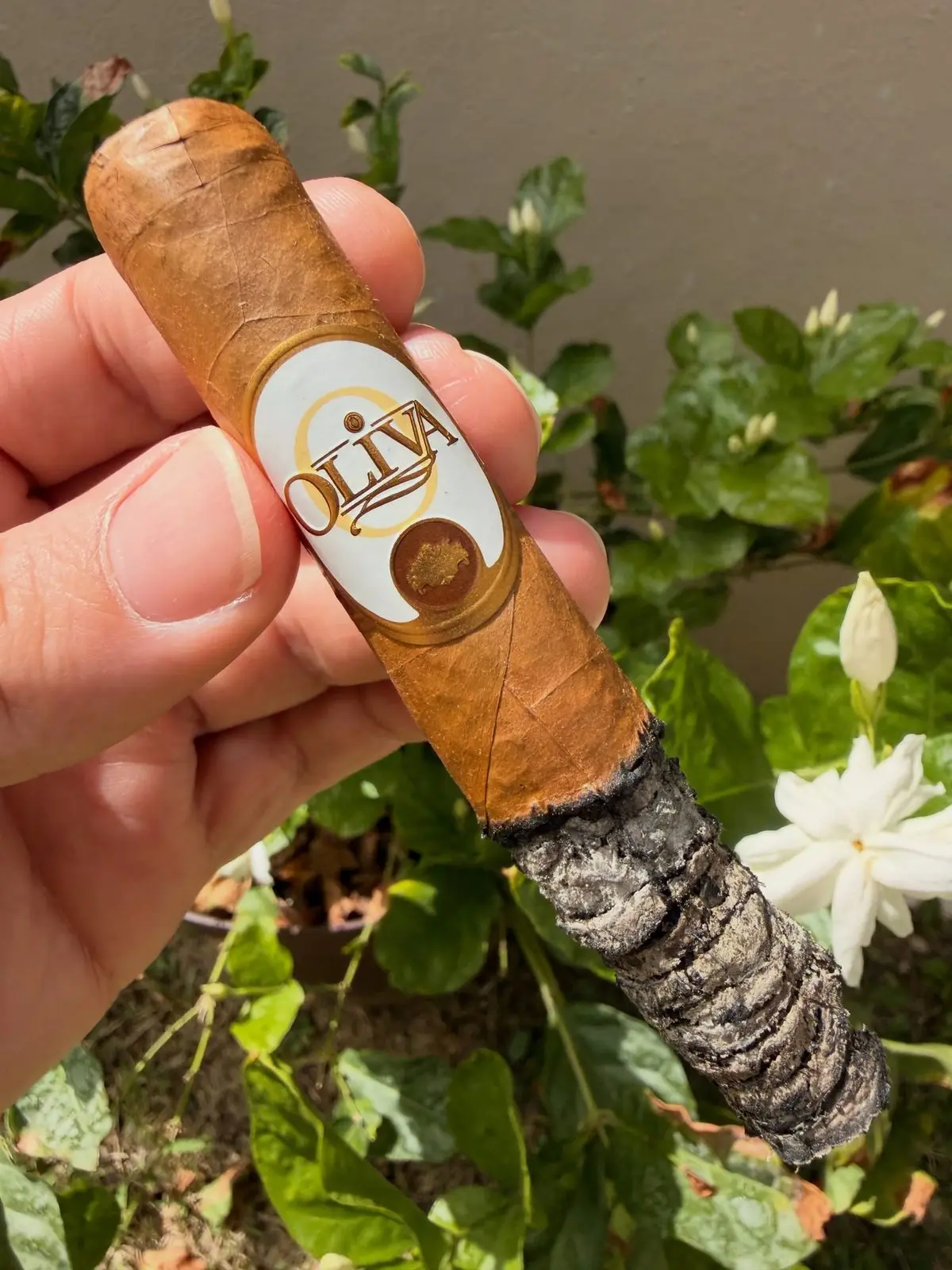
Many people have told me something like this: “I would like to share my opinion, but I do not know how to score a cigar.” If that is you, this guide is for you.
You do not need years of smoking or special vocabulary. A good review is simply an experience told honestly: what you saw, what you felt and whether you would smoke it again. Here I explain what to look at in each moment of the smoke and how that becomes a score.
In short
- Four areas are evaluated: construction and appearance, the smoke, flavor and overall impression.
- In the form you answer simple multiple-choice questions. Your answers give a rating from 1 to 10 in each area, and you can adjust it.
- A public formula turns those four ratings into a score from 50 to 100, the same scale the industry uses.
- The strength and flavors you pick are shown to others, but they are not scored.
- Writing text is optional.
1. Before lighting it: construction and appearance
Take a minute with the cigar in your hand before you cut it.
- The wrapper. It is the outer leaf. Notice whether it looks even, with a natural or oily sheen, or whether it has stains, very thick veins or tears. The color (light, colorado, maduro) does not say whether it is good or bad: it is only the style.
- In the hand. Squeeze it gently along its length. It should feel firm and even, like a well-made object. A very soft spot can mean it will burn fast or unevenly; a very hard one, that the draw will be tight.
- The cold aroma. Smell the foot (the end you light). It does not count toward the score, but it prepares you for what comes next.
This area weighs little in the formula (15%) because an ugly cigar can smoke beautifully. Still, good construction usually announces a good smoke.
2. The smoke: draw, burn and smoke
This area is about how the cigar behaves while you smoke it.
- The draw. It is how easily the smoke comes through. Before lighting it, take a cold draw: it should feel like sipping a light milkshake through a straw. If you have to work at it, it is tight; if the air rushes in with no resistance and the smoke comes out hot, it is loose.
- The burn. Watch the line where the cigar burns. Ideally it moves forward evenly, in a circle. If one side runs far ahead, if you need to touch it up with the lighter several times or if it goes out on its own, that counts against it.
- The smoke. Is it plentiful with a creamy texture, or thin and harsh?
A fair note: if you smoked in strong wind, very slowly (more than two minutes between puffs) or the cigar was badly stored, the cigar is not entirely to blame. If so, mention it in your text.
3. Flavor, third by third
A smoke is split into three thirds: the first, the second and the last. Many cigars change from one third to the next. The questions in the form ask you three things:
- How good it tasted. Keep it simple: delicious, good, average or you did not like it.
- Whether it changed across the thirds. If it kept adding flavors or intensity, that is what is called complexity.
- Whether it was balanced. A balanced cigar feels integrated, with no single flavor covering all the others. If something overpowers in an unpleasant way, or it turns bitter or harsh, it lacks balance.
How to recognize flavors without being an expert
There are no wrong answers. Compare with things you already know:
- Coffee or cocoa: a pleasant, toasty bitterness.
- Cedar or wood: like a freshly sharpened pencil or a cigar box.
- Leather and earth: deep notes, like damp soil after rain.
- Pepper: a tingle on the tongue or in the nose.
- Spice: cinnamon, clove or nutmeg, warmer than peppery.
- Cream, honey, nuts or caramel: smoothness and natural sweetness.
Only pick what you truly noticed, up to five. If you did not recognize any, pick none: that is an honest answer too.
4. Strength is not the same as flavor
Strength is the effect of nicotine on your body, from mild to full. A cigar can have plenty of flavor and be mild, or be full and have little flavor. That is why the form asks for strength separately and it is not scored: it tells the next reader what to expect.
If you are new and a cigar made you dizzy, read my beginner’s guide on nicotine sickness.
5. Overall impression
This is the part that weighs the most (35%), just as on my own scale. There are two questions: how much did you enjoy it? and would you smoke it again? This is where everything that does not fit in the other areas belongs: the moment, the pairing, whether the cigar left you wanting another.
How your score is calculated
- Each answer is worth fixed points, and the average of an area’s answers gives its rating from 1 to 10. If you feel it does not represent you, you can adjust it.
- The four ratings are combined with the same weights Cigar Aficionado publishes for its tastings: construction 15%, smoke 25%, flavor 25% and overall impression 35%.
- That average is placed on the 100-point scale: all 1s give 50 and all 10s give 100.
Example: construction 8, smoke 7, flavor 9 and overall impression 8 give 89 points: very good. You can try the formula and see what each answer is worth on the CigarSolace Scale.
Tips for a fair review
- Review what you experienced that time, not what you expected from the cigar or what others say.
- The negative helps too. An honest review of a cigar you did not like is worth as much as a positive one.
- If it was a gift or a sample, tick the box. It shows on your review and builds trust.
- Text is optional, but two or three lines about the moment, the pairing or what you liked most make your review far more useful.
Step by step on CigarSolace
- Open the cigar’s note and scroll down to “Have you smoked it? Tell me.”
- Choose “Yes, I have” and answer the questions for each area. Your score appears at the end.
- If you like, pick the strength and flavors, and write a few lines.
- Enter your name and email. The first time you get an email to confirm it is you. Your email is never published.
- Later you can see, edit or delete your review from My reviews, no password needed.
The full rules, and how we verify every review, are in the community guidelines. See you in the conversation.
Frequently asked questions
Do I need to be an expert to review a cigar?
No. What counts is your real experience with that cigar. The questions in the form are simple and each one explains what is being evaluated. If you notice how it looks, how it draws, how it burns, how it tasted and whether you would smoke it again, you already have a useful review.
What is the draw of a cigar?
It is how easily the smoke comes through when you take a puff. A good draw feels like sipping a light milkshake through a straw: some resistance, but no effort. If it takes work, it is tight; if the smoke rushes in hot with no resistance, it is loose.
What are the thirds of a cigar?
It is a way of splitting the smoke into three parts: the first third, the second and the last. Many cigars change in flavor and intensity from one third to the next, and noticing those changes is what is called complexity.
What if I cannot recognize any flavor?
That is normal at first. Start simple: sweet or bitter? Smooth or peppery? Does it remind you of coffee, wood, damp earth? Only pick what you truly notice. Your palate gets trained over time.
Does my score count the same as CigarSolace's?
They are two different numbers and are never mixed. My score is my personal experience. The Community Score is the average of readers' verified reviews, calculated with a public formula.
Can I change my review later?
Yes. Open My reviews with the link sent to your email, no password needed, and edit or delete it whenever you want. Each person has one review per cigar: if you edit it, the new one replaces the old one.
The conversation
What do you think?
Share what you think about this story. Agreement and disagreement are both welcome.