

Cutting & Lighting
How to Cut a Cigar, and Which Cut to Choose
Straight cut, V-cut or punch? What each cut does to the draw and the flavor, which cigars suit each one, and how to cut cleanly without damaging the wrapper.
A premium cigar is closed at the head with a small piece of leaf called the cap. Before you light it, you open that cap so the smoke can pass. It sounds simple, and it is, but the way you cut changes the draw, how the smoke reaches your palate, and whether the wrapper holds together until the end.
First, find the cap line
Look at the head of the cigar. You will see one or more thin lines where the cap meets the wrapper. That is the cap line. The golden rule of cutting is to stay above it. Cut below the cap line and the wrapper loses what holds it in place, so it can begin to unravel.
For most cuts, removing about 1–2 mm (around 1/16 of an inch) is enough. You can always cut a little more. You cannot put it back.
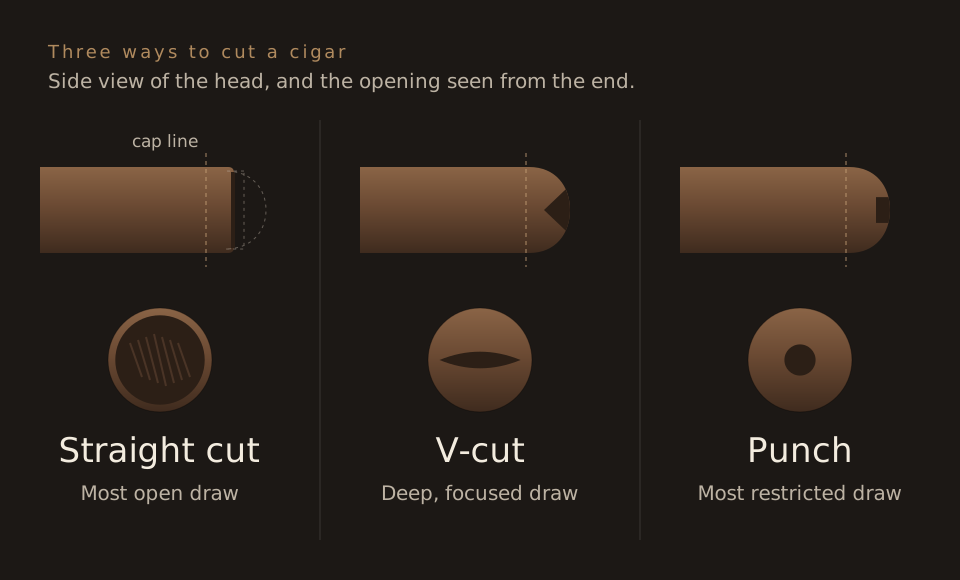
The straight cut
The most common cut. A blade slices straight across the head and opens the full width of the cigar.
- Tools: single-blade or double-blade guillotine cutters. Double blades cut from both sides at once and tend to be cleaner.
- Draw: the most open of all cuts.
- Works with: almost every cigar, including torpedoes and belicosos, where you cut across the tapered tip.
- Tip: make the cut in one quick, decisive motion. Hesitation crushes the head.
The V-cut
A wedge-shaped blade cuts a notch into the head instead of removing the whole tip.
- Draw: firm but generous, because the opening is deep rather than wide.
- Works with: medium and large ring gauges, roughly 46 and up. It is less suited to pointed heads like torpedoes.
- Why people like it: it concentrates the smoke towards the center of the palate, and the cap stays mostly intact, so the head is less likely to come apart.
The punch
A small circular blade bores a round hole in the cap.
- Draw: the most restricted. The hole is usually between 7 and 10 mm wide.
- Works with: rounded heads and medium to large ring gauges. Avoid it on torpedoes, belicosos and very thin cigars.
- Why people like it: it is quick and very tidy, and the smoke arrives focused. Some smokers find tar can build up at the opening late in the cigar. If that happens, a light straight cut can open it up again.
Scissors
Cigar scissors give a straight cut with more control, and are a classic choice at the table. They take a little practice. Turn the cigar as you close the blades so the cut stays even.
Common mistakes
- Cutting too deep. Stay above the cap line.
- Using a dull cutter. A dull blade tears and crushes instead of slicing. Replace or sharpen it.
- Biting the head off. It damages the wrapper and leaves an uneven draw.
- Cutting a dry cigar. Over-dry wrappers crack easily. Store your cigars well before you worry about your cutter.
Which cut should you choose?
There is no single correct answer, only preference. A useful way to learn is to cut the same cigar three ways over a few days and compare the draw and the flavor. You may find, as many smokers do, that you prefer one cut for some cigars and another for the rest.